How to Enable Remote Desktop on Windows 10 in 4 Ways

W. Ting

/

10 mins

/

Updated

May 13, 2025

Want to enable Remote Desktop on Windows 10 but can't find the option or encounter connection issues? You're not alone. Most users run into confusion because Remote Desktop isn't available on all Windows 10 editions, or they miss a few critical setup steps.

In this guide, we'll walk you through how to quickly enable Remote Desktop on Windows 10, explain the system requirements you need to meet, and help you troubleshoot common problems. Read on to turn on Remote Desktop smoothly and start controlling your PC remotely!

System Requirements to Allow Remote Desktop on Windows 10 [Must Read]

Before enabling Remote Desktop on your Windows 10 PC, it's essential to ensure that your system meets the requirements. These requirements ensure that Remote Desktop can function properly and allow for a smooth remote connection. Below are the key factors you need to consider.

  1. Windows 10 Pro, Enterprise, or Education Edition: Remote Desktop is not supported on Windows 10 Home. If you're using the Home edition, you will need to upgrade to Windows 10 Pro, Enterprise, or Education to enable the feature.

  2. Stable Network Connection: For Remote Desktop to function properly, both the local and remote PCs must be connected to a stable and reliable network. A poor or intermittent internet connection could result in dropped sessions or poor performance.

  3. Administrator Account Permissions: To enable Remote Desktop on Windows 10, you need to have administrative privileges on the PC. The account you're using must have permission to make system changes, including enabling Remote Desktop.

  4. PC Must Be Powered On and Connected to the Internet During Remote Sessions: For remote access to work, the target PC must be powered on and connected to the internet. If the PC is asleep or turned off, the remote connection will fail.

By ensuring your system meets these requirements, you can avoid potential issues when setting up Remote Desktop. In the next section, we'll guide you through the steps to enable Remote Desktop on Windows 10.

You May Also Like:

Way 1. Activate Remote Desktop in Windows 10 via System Setting

The simplest way to enable remote desktop settings is through Windows' graphical interface. We'll guide you through 5 straightforward steps to activate Windows App Remote Desktop without technical complexity. Follow along as we configure access directly from your System Properties.

Step 1. Open Settings (Win + I > System)

  • Press the "Windows key + I" to open the Settings app.

  • In the Settings window, click on the "System" option to proceed.

Step 2. Find and Turn On Remote Desktop

  • Scroll down within the "System" section until you find Remote Desktop.

  • Toggle the switch to "On" to enable the feature.

  • You will see a confirmation prompt; click "Confirm" to activate Remote Desktop.
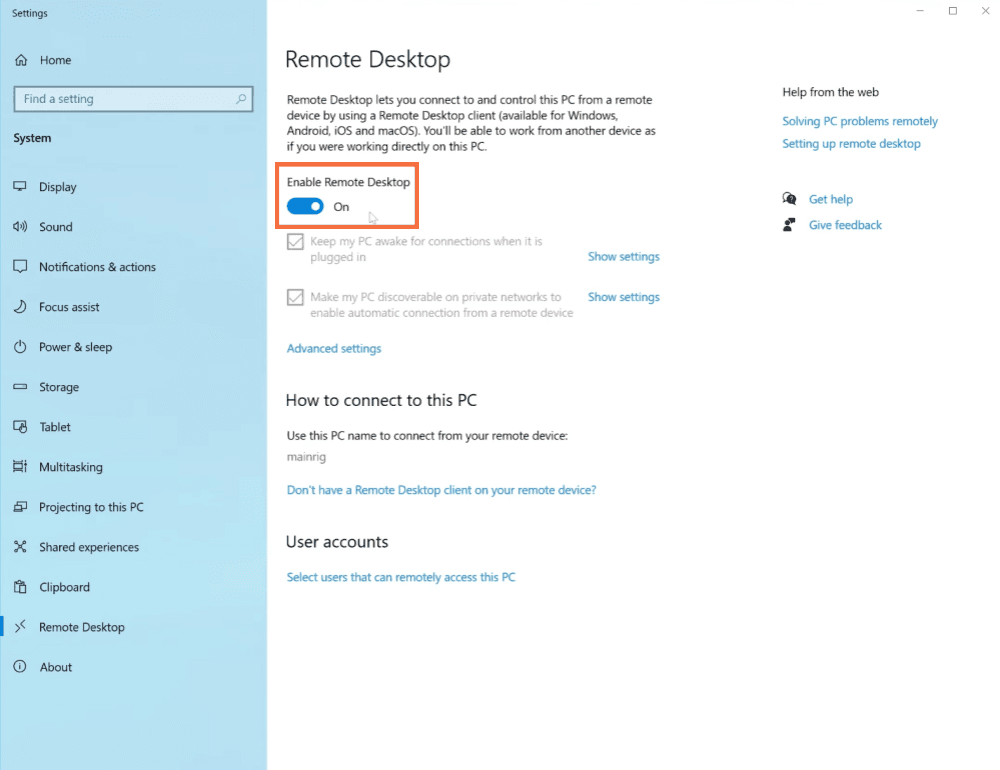
Set Up Remote Desktop Feature on Windows

Step 3. Confirm and Allow Access

  • Once Remote Desktop is turned on, you will need to confirm that your PC is accessible remotely.

  • Windows will show the PC name, which you'll need to connect from another device.

  • Make sure the Remote Desktop feature is enabled for remote access.

Step 4. Adjust Firewall Settings

To ensure your PC can accept remote connections, you need to allow Remote Desktop traffic through the firewall. Follow these steps:

  • Open the "Control Panel" by pressing "Win + R", typing "control", and pressing "Enter".

  • Go to "System and Security", and then select "Windows Defender Firewall".

  • In the left-hand menu, click "Allow an app or feature through Windows Defender Firewall".

  • Ensure that Remote Desktop is checked for both "Private" and "Public" network profiles.

Enable Remote Desktop on Windows Firewall Settings

Step 5. Add Additional Users if Needed

By default, only users with administrator privileges can remotely access the PC. If you want to grant access to other users, follow these steps:

  • In the Remote Desktop settings, click on "Select users that can remotely access this PC".

  • You will be prompted to add the usernames of users you wish to grant access to. Enter the name of the user, and click "Add".

  • These users will now be able to connect remotely to your PC, provided they have the correct login credentials.

Note: If you're using Windows 10 Home, and looking for a faster, easier, and more flexible way to enable windows 10 home remote desktop, the fourth method, DeskIn is highly recommended.

Way 2. Enable RDP in Windows 10 Using CMD

Command Prompt (CMD) is Windows' built-in command-line interpreter. It lets you execute advanced system operations through text commands, offering direct control over OS functions when graphical interfaces aren't accessible or efficient.

Here's how to enable remote desktop command line Windows 10:

STEP 1: Open CMD as administrator Press Win + X → Select Command Prompt (Admin) or Windows PowerShell (Admin).
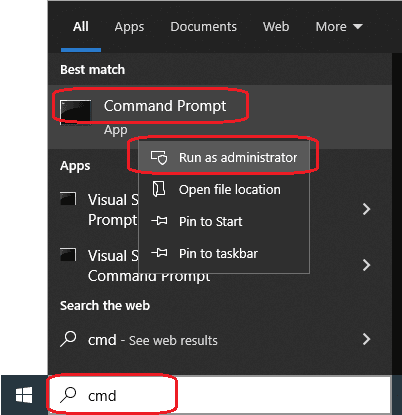
Run As Administrator

STEP 2: Enable Remote Desktop by text

reg add "HKEY_LOCAL_MACHINE\SYSTEM\CurrentControlSet\Control\Terminal Server" /v fDenyTSConnections /t REG_DWORD /d 0 /f

STEP 3: Configure firewall by text

netsh advfirewall firewall set rule group="remote desktop" new enable=Yes

STEP 4: Start services by text (if needed)

net start termservice

STEP 5: Restart your PC

Verify activation via System Properties.

Way 3. Enable RDP in PowerShell

PowerShell is Microsoft's advanced task automation framework. Unlike basic CMD, it combines command-line speed with scripting flexibility, letting you manage complex system configurations through specialized cmdlets (command-lets) for precise control.

Here's how to enable remote desktop on windows 10 via powershell:

STEP 1: Launch PowerShell as administrator

Right-click Start → Select Windows PowerShell (Admin).

STEP 2: Enable Remote Desktop registry setting

Set-ItemProperty -Path

"HKLM:\System\CurrentControlSet\Control\Terminal Server" -Name

"fDenyTSConnections" -Value 0 -Force

Enable Remote Desktop Registry Setting

STEP 3: Configure firewall permissions

Enable-NetFirewallRule -DisplayGroup "Remote Desktop"

STEP 4: Start Remote Desktop services

Start-Service -Name "TermService" -ErrorAction SilentlyContinue

STEP 5: Verify activation (optional)

(Get-ItemProperty -Path "HKLM:\System\CurrentControlSet\Control\Terminal Server").fDenyTSConnections Returns 0 = active.

Way 4. Easier & Free Alternative to Remote Desktop - DeskIn App

DeskIn revolutionizes remote access by offering free, cross-platform control for any Windows 10 edition—whether you're on Home, Pro, or Enterprise. Unlike native RDP, it eliminates version restrictions and complex setups while supporting mobile-to-PC connections. Crucially, it lets you enable remote desktop for Windows 10 Home instantly, bypassing Microsoft's edition limitations. Enjoy one-click sessions, file transfer, and 4K streaming without port forwarding or firewall tweaks through this best and secure remote desktop.

Click here to download DeskIn

DeskIn offers:

  • No version limitations: Work across Windows 10 Home, Pro, other higher editions like Windows 11, 12, and so on, or even support older versions for free.

  • Simple setup: No need to configure firewalls or ports.

  • Cross-platform access: Connect from Windows, MacOS, and Web browser, even Android and iOS.

  • High-speed performance: Optimized for smooth remote sessions, even on lower bandwidths.

Turn on Remote Desktop on Windows 10 Pro, Enterprise, or Education Edition

With DeskIn, you can start remote control in just a few clicks, no complicated system settings required. Here are the brief steps for you to use it.

STEP 1: Download and install DeskIn on both your local and remote devices

STEP 2: Sign up and log in with the same DeskIn account on both sides.

STEP 3: Get the DeskIn ID of the remote device you want to control.
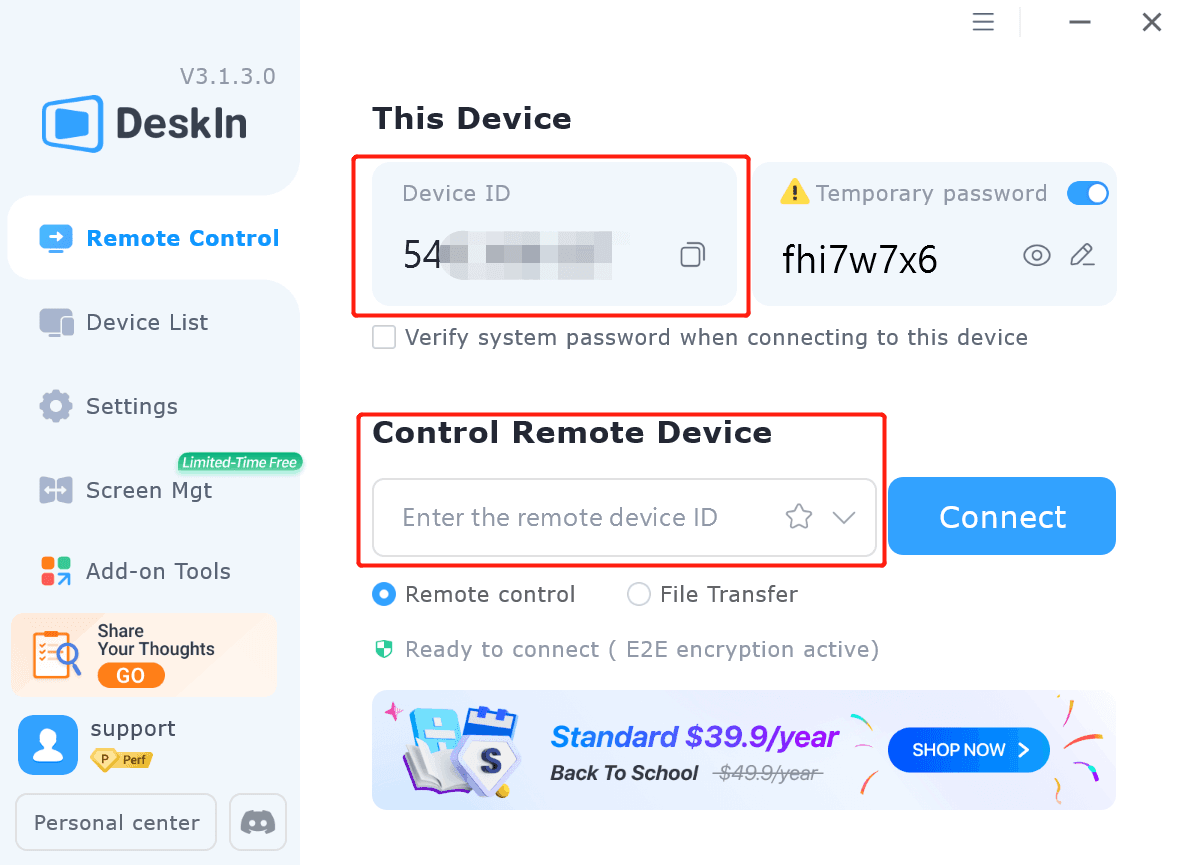
Remote Access Windows via DeskIn

STEP 4: Enter the ID and connect, then enjoy a smooth and secure remote session instantly.

For different devices remote steps in detail:

How to Find Your Windows 10 Computer Name or IP Address

After enabling Remote Desktop, you'll need your computer's name or IP address to establish a successful connection from another device. Here's how to quickly find this information on Windows 10.

Find Your Computer Name

  1. Press "Win + I" to open the Settings app.

  2. Navigate to "System > About".

  3. Under the "Device specifications" section, look for Device name — this is your computer's name, which you'll use for Remote Desktop connections.
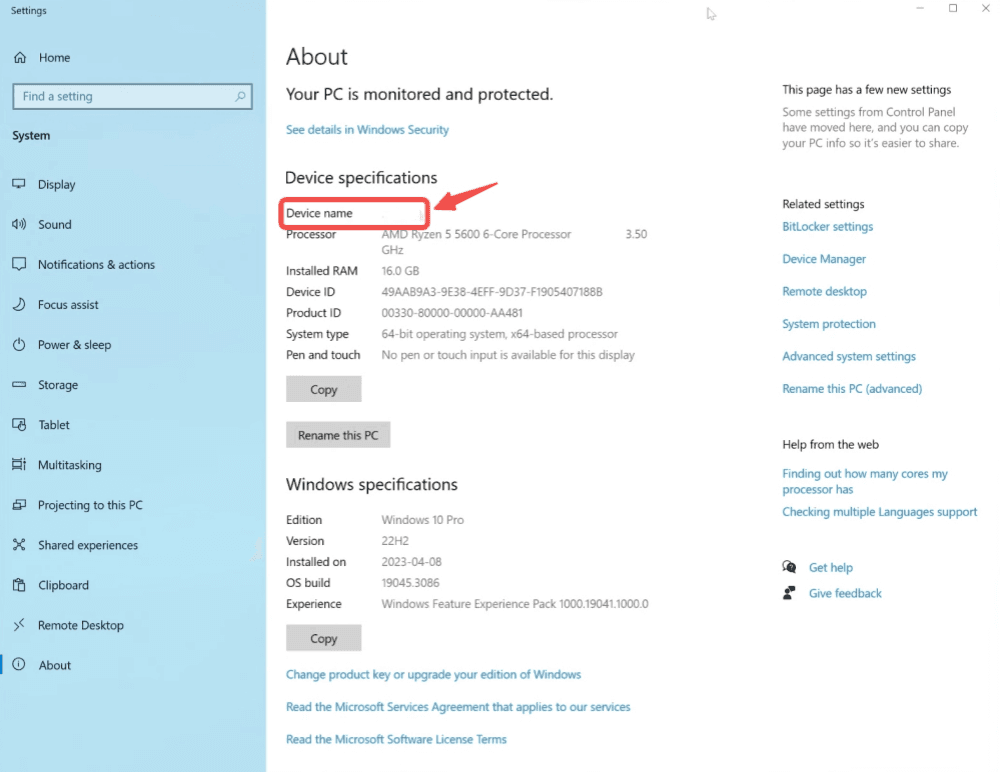
Find Your Computer Name on Windows PC

Find Your IP Address

  1. Press "Win + R", type "cmd", and press "Enter" to open the Command Prompt.

  2. In the Command Prompt window, type "ipconfig" and press "Enter".

  3. Look for the IPv4 Address under your active network connection. This is your PC's IP address.
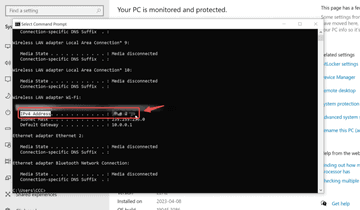
Find Your IP Address on Windows PC

After you've got all the information you need, you can start to connect with the Remote Desktop Connection to easily remote access another Windows computer!

👀 Tips:

  • If you are connecting within the same local network (LAN), using the Device name is usually enough.

  • For connections over the internet, you might need the public IP address and configure router settings like port forwarding.

Common Fixes About Remote Desktop Windows 10 Activation

Even after following the setup steps, you might encounter issues when trying to activate or use Remote Desktop on Windows 10. Below are answers and solutions to some of the most common problems.

Can't Find Remote Desktop Connection Windows 10?

If you can't locate the Remote Desktop settings or app on your Windows 10 device, it could be due to one of the following reasons:

  • Windows 10 Home Edition: Remote Desktop is not available on Windows 10 Home. You will need to upgrade to Windows 10 Pro, Enterprise, or Education to access this feature.

  • Feature Not Enabled: Even on supported editions, Remote Desktop may not be turned on by default. Follow the steps outlined earlier to enable it manually.

  • Hidden Settings: Sometimes, system updates or IT policies may hide Remote Desktop settings. Ensure your Windows 10 installation is up-to-date and check with your system administrator if needed.

Does Remote Desktop Connection Come with Windows 10?

Remote Desktop Connection is included in certain editions of Windows 10, but not all:

  • Included: Windows 10 Pro, Enterprise, and Education editions come with built-in Remote Desktop functionality.

  • Not Included: Windows 10 Home edition does not support Remote Desktop hosting (only connecting to other PCs is possible).

    • If you're using Windows 10 Home and want to enable Remote Desktop hosting, you will need to upgrade to a Pro version or explore third-party remote desktop software alternatives.

Cannot Use Remote Desktop Connection on Windows 10?

If you have enabled Remote Desktop but still cannot connect, check the following:

  • Firewall Settings: Ensure that Remote Desktop is allowed through Windows Defender Firewall. Go to "Control Panel > Windows Defender Firewall > Allow an app or feature through Windows Defender Firewall", and make sure Remote Desktop is enabled for both private and public networks.

  • Network Configuration: Remote Desktop requires a stable network connection. If you're connecting over the internet, you may need to configure port forwarding (TCP 3389) on your router.

  • User Permissions: By default, only administrator accounts are allowed to connect remotely. Make sure the user account you are trying to use has remote access permission. You can add users in "Settings > System > Remote Desktop > Select users that can remotely access this PC".

FAQs About Enable Remote Desktop on Windows 10

How to Check If Remote Desktop is Enabled in Windows 10?

Check if RDP is enabled via Remote Desktop settings:

STEP 1: Press Win + I → System → About.

STEP 2: Under "Related settings," select Advanced system settings.

STEP 3: Navigate to Remote → Remote Desktop.

STEP 4: Verify if Allow remote connections to this computer is selected.

How to Connect Two Computers Remotely?

Native Remote Desktop requires Windows Pro/Enterprise/Education. For Windows 10 Home or simpler setups, use third-party tools like DeskIn (free):

  • No version limits: Works on any Windows edition

  • Cross-platform: PC↔PC, mobile↔PC

  • Zero-config: Automatic connection, no IP/port forwarding

  • Optimized: Low-latency screen sharing & file transfer

Final Words

Enabling Remote Desktop on Windows 10 can greatly enhance your productivity, whether you're accessing work files from home or providing support to another PC. By following the correct setup steps and addressing common issues, you can ensure a smooth and secure remote connection.

If you find Remote Desktop too complicated or limited by system requirements, tools like DeskIn offer a simpler and more flexible alternative. Choose the method that best fits your needs, and enjoy seamless remote access on Windows 10!

Click here to download DeskIn

Want to enable Remote Desktop on Windows 10 but can't find the option or encounter connection issues? You're not alone. Most users run into confusion because Remote Desktop isn't available on all Windows 10 editions, or they miss a few critical setup steps.

In this guide, we'll walk you through how to quickly enable Remote Desktop on Windows 10, explain the system requirements you need to meet, and help you troubleshoot common problems. Read on to turn on Remote Desktop smoothly and start controlling your PC remotely!

System Requirements to Allow Remote Desktop on Windows 10 [Must Read]

Before enabling Remote Desktop on your Windows 10 PC, it's essential to ensure that your system meets the requirements. These requirements ensure that Remote Desktop can function properly and allow for a smooth remote connection. Below are the key factors you need to consider.

  1. Windows 10 Pro, Enterprise, or Education Edition: Remote Desktop is not supported on Windows 10 Home. If you're using the Home edition, you will need to upgrade to Windows 10 Pro, Enterprise, or Education to enable the feature.

  2. Stable Network Connection: For Remote Desktop to function properly, both the local and remote PCs must be connected to a stable and reliable network. A poor or intermittent internet connection could result in dropped sessions or poor performance.

  3. Administrator Account Permissions: To enable Remote Desktop on Windows 10, you need to have administrative privileges on the PC. The account you're using must have permission to make system changes, including enabling Remote Desktop.

  4. PC Must Be Powered On and Connected to the Internet During Remote Sessions: For remote access to work, the target PC must be powered on and connected to the internet. If the PC is asleep or turned off, the remote connection will fail.

By ensuring your system meets these requirements, you can avoid potential issues when setting up Remote Desktop. In the next section, we'll guide you through the steps to enable Remote Desktop on Windows 10.

You May Also Like:

Way 1. Activate Remote Desktop in Windows 10 via System Setting

The simplest way to enable remote desktop settings is through Windows' graphical interface. We'll guide you through 5 straightforward steps to activate Windows App Remote Desktop without technical complexity. Follow along as we configure access directly from your System Properties.

Step 1. Open Settings (Win + I > System)

  • Press the "Windows key + I" to open the Settings app.

  • In the Settings window, click on the "System" option to proceed.

Step 2. Find and Turn On Remote Desktop

  • Scroll down within the "System" section until you find Remote Desktop.

  • Toggle the switch to "On" to enable the feature.

  • You will see a confirmation prompt; click "Confirm" to activate Remote Desktop.

Set Up Remote Desktop Feature on Windows

Step 3. Confirm and Allow Access

  • Once Remote Desktop is turned on, you will need to confirm that your PC is accessible remotely.

  • Windows will show the PC name, which you'll need to connect from another device.

  • Make sure the Remote Desktop feature is enabled for remote access.

Step 4. Adjust Firewall Settings

To ensure your PC can accept remote connections, you need to allow Remote Desktop traffic through the firewall. Follow these steps:

  • Open the "Control Panel" by pressing "Win + R", typing "control", and pressing "Enter".

  • Go to "System and Security", and then select "Windows Defender Firewall".

  • In the left-hand menu, click "Allow an app or feature through Windows Defender Firewall".

  • Ensure that Remote Desktop is checked for both "Private" and "Public" network profiles.

Enable Remote Desktop on Windows Firewall Settings

Step 5. Add Additional Users if Needed

By default, only users with administrator privileges can remotely access the PC. If you want to grant access to other users, follow these steps:

  • In the Remote Desktop settings, click on "Select users that can remotely access this PC".

  • You will be prompted to add the usernames of users you wish to grant access to. Enter the name of the user, and click "Add".

  • These users will now be able to connect remotely to your PC, provided they have the correct login credentials.

Note: If you're using Windows 10 Home, and looking for a faster, easier, and more flexible way to enable windows 10 home remote desktop, the fourth method, DeskIn is highly recommended.

Way 2. Enable RDP in Windows 10 Using CMD

Command Prompt (CMD) is Windows' built-in command-line interpreter. It lets you execute advanced system operations through text commands, offering direct control over OS functions when graphical interfaces aren't accessible or efficient.

Here's how to enable remote desktop command line Windows 10:

STEP 1: Open CMD as administrator Press Win + X → Select Command Prompt (Admin) or Windows PowerShell (Admin).

Run As Administrator

STEP 2: Enable Remote Desktop by text

reg add "HKEY_LOCAL_MACHINE\SYSTEM\CurrentControlSet\Control\Terminal Server" /v fDenyTSConnections /t REG_DWORD /d 0 /f

STEP 3: Configure firewall by text

netsh advfirewall firewall set rule group="remote desktop" new enable=Yes

STEP 4: Start services by text (if needed)

net start termservice

STEP 5: Restart your PC

Verify activation via System Properties.

Way 3. Enable RDP in PowerShell

PowerShell is Microsoft's advanced task automation framework. Unlike basic CMD, it combines command-line speed with scripting flexibility, letting you manage complex system configurations through specialized cmdlets (command-lets) for precise control.

Here's how to enable remote desktop on windows 10 via powershell:

STEP 1: Launch PowerShell as administrator

Right-click Start → Select Windows PowerShell (Admin).

STEP 2: Enable Remote Desktop registry setting

Set-ItemProperty -Path

"HKLM:\System\CurrentControlSet\Control\Terminal Server" -Name

"fDenyTSConnections" -Value 0 -Force

Enable Remote Desktop Registry Setting

STEP 3: Configure firewall permissions

Enable-NetFirewallRule -DisplayGroup "Remote Desktop"

STEP 4: Start Remote Desktop services

Start-Service -Name "TermService" -ErrorAction SilentlyContinue

STEP 5: Verify activation (optional)

(Get-ItemProperty -Path "HKLM:\System\CurrentControlSet\Control\Terminal Server").fDenyTSConnections Returns 0 = active.

Way 4. Easier & Free Alternative to Remote Desktop - DeskIn App

DeskIn revolutionizes remote access by offering free, cross-platform control for any Windows 10 edition—whether you're on Home, Pro, or Enterprise. Unlike native RDP, it eliminates version restrictions and complex setups while supporting mobile-to-PC connections. Crucially, it lets you enable remote desktop for Windows 10 Home instantly, bypassing Microsoft's edition limitations. Enjoy one-click sessions, file transfer, and 4K streaming without port forwarding or firewall tweaks through this best and secure remote desktop.

Click here to download DeskIn

DeskIn offers:

  • No version limitations: Work across Windows 10 Home, Pro, other higher editions like Windows 11, 12, and so on, or even support older versions for free.

  • Simple setup: No need to configure firewalls or ports.

  • Cross-platform access: Connect from Windows, MacOS, and Web browser, even Android and iOS.

  • High-speed performance: Optimized for smooth remote sessions, even on lower bandwidths.

Turn on Remote Desktop on Windows 10 Pro, Enterprise, or Education Edition

With DeskIn, you can start remote control in just a few clicks, no complicated system settings required. Here are the brief steps for you to use it.

STEP 1: Download and install DeskIn on both your local and remote devices

STEP 2: Sign up and log in with the same DeskIn account on both sides.

STEP 3: Get the DeskIn ID of the remote device you want to control.

Remote Access Windows via DeskIn

STEP 4: Enter the ID and connect, then enjoy a smooth and secure remote session instantly.

For different devices remote steps in detail:

How to Find Your Windows 10 Computer Name or IP Address

After enabling Remote Desktop, you'll need your computer's name or IP address to establish a successful connection from another device. Here's how to quickly find this information on Windows 10.

Find Your Computer Name

  1. Press "Win + I" to open the Settings app.

  2. Navigate to "System > About".

  3. Under the "Device specifications" section, look for Device name — this is your computer's name, which you'll use for Remote Desktop connections.

Find Your Computer Name on Windows PC

Find Your IP Address

  1. Press "Win + R", type "cmd", and press "Enter" to open the Command Prompt.

  2. In the Command Prompt window, type "ipconfig" and press "Enter".

  3. Look for the IPv4 Address under your active network connection. This is your PC's IP address.

Find Your IP Address on Windows PC

After you've got all the information you need, you can start to connect with the Remote Desktop Connection to easily remote access another Windows computer!

👀 Tips:

  • If you are connecting within the same local network (LAN), using the Device name is usually enough.

  • For connections over the internet, you might need the public IP address and configure router settings like port forwarding.

Common Fixes About Remote Desktop Windows 10 Activation

Even after following the setup steps, you might encounter issues when trying to activate or use Remote Desktop on Windows 10. Below are answers and solutions to some of the most common problems.

Can't Find Remote Desktop Connection Windows 10?

If you can't locate the Remote Desktop settings or app on your Windows 10 device, it could be due to one of the following reasons:

  • Windows 10 Home Edition: Remote Desktop is not available on Windows 10 Home. You will need to upgrade to Windows 10 Pro, Enterprise, or Education to access this feature.

  • Feature Not Enabled: Even on supported editions, Remote Desktop may not be turned on by default. Follow the steps outlined earlier to enable it manually.

  • Hidden Settings: Sometimes, system updates or IT policies may hide Remote Desktop settings. Ensure your Windows 10 installation is up-to-date and check with your system administrator if needed.

Does Remote Desktop Connection Come with Windows 10?

Remote Desktop Connection is included in certain editions of Windows 10, but not all:

  • Included: Windows 10 Pro, Enterprise, and Education editions come with built-in Remote Desktop functionality.

  • Not Included: Windows 10 Home edition does not support Remote Desktop hosting (only connecting to other PCs is possible).

    • If you're using Windows 10 Home and want to enable Remote Desktop hosting, you will need to upgrade to a Pro version or explore third-party remote desktop software alternatives.

Cannot Use Remote Desktop Connection on Windows 10?

If you have enabled Remote Desktop but still cannot connect, check the following:

  • Firewall Settings: Ensure that Remote Desktop is allowed through Windows Defender Firewall. Go to "Control Panel > Windows Defender Firewall > Allow an app or feature through Windows Defender Firewall", and make sure Remote Desktop is enabled for both private and public networks.

  • Network Configuration: Remote Desktop requires a stable network connection. If you're connecting over the internet, you may need to configure port forwarding (TCP 3389) on your router.

  • User Permissions: By default, only administrator accounts are allowed to connect remotely. Make sure the user account you are trying to use has remote access permission. You can add users in "Settings > System > Remote Desktop > Select users that can remotely access this PC".

FAQs About Enable Remote Desktop on Windows 10

How to Check If Remote Desktop is Enabled in Windows 10?

Check if RDP is enabled via Remote Desktop settings:

STEP 1: Press Win + I → System → About.

STEP 2: Under "Related settings," select Advanced system settings.

STEP 3: Navigate to Remote → Remote Desktop.

STEP 4: Verify if Allow remote connections to this computer is selected.

How to Connect Two Computers Remotely?

Native Remote Desktop requires Windows Pro/Enterprise/Education. For Windows 10 Home or simpler setups, use third-party tools like DeskIn (free):

  • No version limits: Works on any Windows edition

  • Cross-platform: PC↔PC, mobile↔PC

  • Zero-config: Automatic connection, no IP/port forwarding

  • Optimized: Low-latency screen sharing & file transfer

Final Words

Enabling Remote Desktop on Windows 10 can greatly enhance your productivity, whether you're accessing work files from home or providing support to another PC. By following the correct setup steps and addressing common issues, you can ensure a smooth and secure remote connection.

If you find Remote Desktop too complicated or limited by system requirements, tools like DeskIn offer a simpler and more flexible alternative. Choose the method that best fits your needs, and enjoy seamless remote access on Windows 10!

Click here to download DeskIn

Play x Work
All at Once

LIMITED SALE 9.9 - 9.16

LIMITED SALE 9.9 - 9.16

DeskIn Remote Game

only $14.32 USD 🎉 Limited on July 16-31

Add promo code: deskinsummer1

DeskIn Performance

Over 70% OFF

Yearly Plan Only $12.49/Month

Use Promo Code: DESKIN50

DeskIn Performance

Over 70% OFF

Yearly Plan Only $12.49/Month

Use Promo Code: DESKIN50
How to Enable Remote Desktop on Windows 10 in 4 Ways

Table of Contents

LIMITED SALE 9.9 - 9.16

DeskIn Performance

Over 70% OFF

Yearly Plan Only $12.49/Month

Use Promo Code: DESKIN50

What’s next?

Developers work smarter with remote desktop

COMPARISONS

How Remote Desktop Can Help App and Game Developers Work Smarter

In today’s fast-growing digital era, companies are constantly building applications to simplify workflows and boost productivity. From software developers to game studios, the demand for remote access solutions is skyrocketing. Teams need tools that allow them to work seamlessly across different locations while keeping efficiency and collaboration high.

DeskIn: High-Performance Remote Access for Every Need

One of the best solutions for remote access is DeskIn—a remote desktop tool designed to deliver top-tier performance for professionals, developers, and even gamers. Unlike basic remote desktop tools, DeskIn is built for multi-purpose use. Whether you’re debugging an app, managing a design project, or testing games, DeskIn ensures smooth remote access without lag or downtime. With powerful servers, DeskIn provides up to 144fps in 2K true color, giving you a real-time experience that feels just like working on your main machine.

In this article, we’ll explore how DeskIn can simplify development, enhance collaboration, and cut costs for teams who rely heavily on remote access.

Why DeskIn Remote Access Stands Out for Developers & Game Studios

In game and app development, every detail matters. DeskIn equips teams with the essential tools to achieve smooth and secure remote access:

  1. 2K True Color Mirroring & Extending
    Accurate visuals are critical for design and testing. With 2K mirroring and extending, developers can enjoy crystal-clear quality through remote access, making it easy to review graphics, UI, and animations as if they were working directly on a high-end workstation.

  2. Root-Free Android Control
    DeskIn offers remote access to Android devices without requiring root. This makes it perfect for mobile app developers who need to test applications safely and quickly, avoiding complicated setup or risks.

  3. Ultra-Low Latency & Fast File Transfer
    With less than 40ms latency, DeskIn ensures your remote access feels instant—ideal for real-time debugging or game testing. On top of that, DeskIn enables file transfer up to 12 MB/s, so moving large project files across devices is fast and effortless.

  4. Scale Up to 100 Devices
    Teams often need to manage multiple workstations. DeskIn supports remote access for up to 100 devices under one ecosystem, making it easy to scale operations for larger development teams or studios.

  5. Enterprise-Grade Security
    Security is non-negotiable in remote access. DeskIn protects all connections with 256-bit encryption, the same standard used in financial systems, ensuring sensitive projects and client data remain safe at all times.

  6. Cost Efficiency & Flexibility
    With DeskIn, teams no longer need high-end hardware for every member. Even from a lightweight laptop or tablet, users can access powerful workstations remotely. This flexibility reduces costs without sacrificing performance, making remote access both effective and economical.

Conclusion

DeskIn is more than just a remote desktop—it’s a complete remote access solution designed to meet modern productivity needs. From ultra-low latency and secure connections to Android control and large-scale device support, DeskIn empowers developers, IT teams, and creative professionals to work anywhere, anytime.

For application developers, game studios, and professionals looking for reliable remote access, DeskIn offers the perfect balance of speed, security, and cost efficiency.

Get start your DeskIn remote access

Developers work smarter with remote desktop

COMPARISONS

How Remote Desktop Can Help App and Game Developers Work Smarter

In today’s fast-growing digital era, companies are constantly building applications to simplify workflows and boost productivity. From software developers to game studios, the demand for remote access solutions is skyrocketing. Teams need tools that allow them to work seamlessly across different locations while keeping efficiency and collaboration high.

DeskIn: High-Performance Remote Access for Every Need

One of the best solutions for remote access is DeskIn—a remote desktop tool designed to deliver top-tier performance for professionals, developers, and even gamers. Unlike basic remote desktop tools, DeskIn is built for multi-purpose use. Whether you’re debugging an app, managing a design project, or testing games, DeskIn ensures smooth remote access without lag or downtime. With powerful servers, DeskIn provides up to 144fps in 2K true color, giving you a real-time experience that feels just like working on your main machine.

In this article, we’ll explore how DeskIn can simplify development, enhance collaboration, and cut costs for teams who rely heavily on remote access.

Why DeskIn Remote Access Stands Out for Developers & Game Studios

In game and app development, every detail matters. DeskIn equips teams with the essential tools to achieve smooth and secure remote access:

  1. 2K True Color Mirroring & Extending
    Accurate visuals are critical for design and testing. With 2K mirroring and extending, developers can enjoy crystal-clear quality through remote access, making it easy to review graphics, UI, and animations as if they were working directly on a high-end workstation.

  2. Root-Free Android Control
    DeskIn offers remote access to Android devices without requiring root. This makes it perfect for mobile app developers who need to test applications safely and quickly, avoiding complicated setup or risks.

  3. Ultra-Low Latency & Fast File Transfer
    With less than 40ms latency, DeskIn ensures your remote access feels instant—ideal for real-time debugging or game testing. On top of that, DeskIn enables file transfer up to 12 MB/s, so moving large project files across devices is fast and effortless.

  4. Scale Up to 100 Devices
    Teams often need to manage multiple workstations. DeskIn supports remote access for up to 100 devices under one ecosystem, making it easy to scale operations for larger development teams or studios.

  5. Enterprise-Grade Security
    Security is non-negotiable in remote access. DeskIn protects all connections with 256-bit encryption, the same standard used in financial systems, ensuring sensitive projects and client data remain safe at all times.

  6. Cost Efficiency & Flexibility
    With DeskIn, teams no longer need high-end hardware for every member. Even from a lightweight laptop or tablet, users can access powerful workstations remotely. This flexibility reduces costs without sacrificing performance, making remote access both effective and economical.

Conclusion

DeskIn is more than just a remote desktop—it’s a complete remote access solution designed to meet modern productivity needs. From ultra-low latency and secure connections to Android control and large-scale device support, DeskIn empowers developers, IT teams, and creative professionals to work anywhere, anytime.

For application developers, game studios, and professionals looking for reliable remote access, DeskIn offers the perfect balance of speed, security, and cost efficiency.

Get start your DeskIn remote access

dental using remote desktop

COMPARISONS

Transforming Dental CAD Workflows: How Village Denture Studio Leveraged DeskIn for Seamless Remote Access

In today’s fast-paced digital landscape, the ability to work seamlessly from anywhere has become essential—especially for industries that rely on high-performance design software. For dental labs, where precision and efficiency are critical, finding the right remote access solution can make all the difference.

Background

Village Denture Studio is a specialized dental lab comprising four Clinical Dental Technicians and a dedicated technician specializing in dental CAD design. With five professionals sharing access to CAD workstations across multiple clinics at varying times, the team faced challenges in accessing their design workstations remotely. The need for seamless and efficient remote access became increasingly apparent as the team sought to enhance their workflow and productivity.

Challenges

Initially, the team utilized Splashtop Pro for remote access. However, they encountered issues such as lag and a lack of smoothness, which hindered their ability to perform intricate CAD design tasks remotely.

Implementation

DeskIn was installed on all CAD PCs, enabling staff to remotely access their workstations from home computers. This setup proved particularly beneficial for team members who travel frequently, allowing them to access CAD PCs from various devices, including MacBooks.

Results

The integration of DeskIn allowed the team to utilize their CAD PCs more efficiently without location constraints. DeskIn's ultra-low latency and seamless integration allowed the technicians to access CAD workstations remotely without compromising on performance. This advancement meant that design work could be done from various locations, whether at home, during travel, or from different clinics, without the need to be physically present at the lab.The seamless experience made it feel as if they were working directly on the actual computer, despite being remote.

Transforming the Work Environment

The adoption of DeskIn has significantly transformed the studio's workflow:

  • Increased Accessibility: Technicians can now access CAD systems from any location, facilitating flexible work arrangements and reducing the need for commuting.

  • Cost Efficiency: The need to purchase additional CAD workstations for each technician has been eliminated, leading to cost savings for the studio.

  • Improved Work-Life Balance: Technicians can manage their work schedules more effectively, balancing professional responsibilities with personal commitments.

Community Impact

Recently, during an industry course, a team member had the opportunity to demonstrate DeskIn to fellow dental professionals while discussing remote work solutions. Colleagues were genuinely surprised and impressed by the performance, particularly considering that the CAD software is traditionally PC-only. Many expected the experience to be laggy or difficult on a MacBook, but DeskIn’s responsiveness exceeded expectations.

They commented on how smooth and intuitive the remote workflow felt, remarking that it was almost indistinguishable from working directly on the CAD PC itself. Several attendees noted that this could radically change how dental labs manage CAD operations, enabling flexible work arrangements and remote collaboration in ways they had not considered before. The demonstration sparked conversations about adopting similar solutions in their own practices, highlighting DeskIn’s potential industry-wide impact.

Future Outlook

Looking ahead, DeskIn supports the studio's growth plans. The team no longer anticipates the need to purchase separate CAD PCs for each staff member. Instead, they can efficiently use DeskIn to remotely access existing PCs, optimizing resource utilization and maintaining flexibility.

This success story highlights how DeskIn transformed Village Denture Studio's CAD design workflow, enabling remote access, enhancing efficiency, and supporting future growth.


Read More Case Study: 

dental using remote desktop

COMPARISONS

Transforming Dental CAD Workflows: How Village Denture Studio Leveraged DeskIn for Seamless Remote Access

In today’s fast-paced digital landscape, the ability to work seamlessly from anywhere has become essential—especially for industries that rely on high-performance design software. For dental labs, where precision and efficiency are critical, finding the right remote access solution can make all the difference.

Background

Village Denture Studio is a specialized dental lab comprising four Clinical Dental Technicians and a dedicated technician specializing in dental CAD design. With five professionals sharing access to CAD workstations across multiple clinics at varying times, the team faced challenges in accessing their design workstations remotely. The need for seamless and efficient remote access became increasingly apparent as the team sought to enhance their workflow and productivity.

Challenges

Initially, the team utilized Splashtop Pro for remote access. However, they encountered issues such as lag and a lack of smoothness, which hindered their ability to perform intricate CAD design tasks remotely.

Implementation

DeskIn was installed on all CAD PCs, enabling staff to remotely access their workstations from home computers. This setup proved particularly beneficial for team members who travel frequently, allowing them to access CAD PCs from various devices, including MacBooks.

Results

The integration of DeskIn allowed the team to utilize their CAD PCs more efficiently without location constraints. DeskIn's ultra-low latency and seamless integration allowed the technicians to access CAD workstations remotely without compromising on performance. This advancement meant that design work could be done from various locations, whether at home, during travel, or from different clinics, without the need to be physically present at the lab.The seamless experience made it feel as if they were working directly on the actual computer, despite being remote.

Transforming the Work Environment

The adoption of DeskIn has significantly transformed the studio's workflow:

  • Increased Accessibility: Technicians can now access CAD systems from any location, facilitating flexible work arrangements and reducing the need for commuting.

  • Cost Efficiency: The need to purchase additional CAD workstations for each technician has been eliminated, leading to cost savings for the studio.

  • Improved Work-Life Balance: Technicians can manage their work schedules more effectively, balancing professional responsibilities with personal commitments.

Community Impact

Recently, during an industry course, a team member had the opportunity to demonstrate DeskIn to fellow dental professionals while discussing remote work solutions. Colleagues were genuinely surprised and impressed by the performance, particularly considering that the CAD software is traditionally PC-only. Many expected the experience to be laggy or difficult on a MacBook, but DeskIn’s responsiveness exceeded expectations.

They commented on how smooth and intuitive the remote workflow felt, remarking that it was almost indistinguishable from working directly on the CAD PC itself. Several attendees noted that this could radically change how dental labs manage CAD operations, enabling flexible work arrangements and remote collaboration in ways they had not considered before. The demonstration sparked conversations about adopting similar solutions in their own practices, highlighting DeskIn’s potential industry-wide impact.

Future Outlook

Looking ahead, DeskIn supports the studio's growth plans. The team no longer anticipates the need to purchase separate CAD PCs for each staff member. Instead, they can efficiently use DeskIn to remotely access existing PCs, optimizing resource utilization and maintaining flexibility.

This success story highlights how DeskIn transformed Village Denture Studio's CAD design workflow, enabling remote access, enhancing efficiency, and supporting future growth.


Read More Case Study: 

play gtav on mobile device

COMPARISONS

How to Play GTA V on Mobile: The Ultimate Guide for Gaming on the Go

Can you play GTA V on mobile? It's a question that haunts every mobile gamer who's ever wanted to cruise through Los Santos on their phone.

If you're tired of waiting for Rockstar to officially bring GTA V to mobile, or you've tried sketchy workarounds that left your device vulnerable, here's some good news: there's a legit way to play GTA V on your phone or tablet. And it's smoother than Franklin's driving skills.

Let me show you why playing GTA V on mobile seemed impossible — and how a smart remote gaming solution called Deskin turns your mobile device into a portable Los Santos gateway.

interface gta v on mobile device

The Reality Check: Why GTA V Mobile Doesn't Exist (Yet)

Here's the truth bomb: Rockstar Games has never released an official GTA V mobile port. Despite the massive success of GTA San Andreas and Vice City on mobile platforms, GTA V remains locked to PC, PlayStation, and Xbox.

Why? The game is massive. We're talking about a 100+ GB install with graphics that push even high-end PCs to their limits. Mobile hardware, while impressive, isn't quite ready for that level of chaos.

The numbers tell the story:

  • GTA V requires 8GB RAM minimum on PC

  • Most mobile devices have 4-8GB RAM total

  • The game's graphics engine demands dedicated GPU power that mobile chips can't match

But here's where it gets interesting. While you can't install GTA V directly on mobile, you can absolutely play it on your phone or tablet using remote gaming technology.

Method 1: Cloud Gaming Services - Rent Gaming Power

Cloud gaming flips the script entirely. Instead of using your own PC, you rent gaming power from services like GeForce NOW, Xbox Cloud Gaming, or PlayStation Now.

The appeal: No gaming PC required. Just sign up, log in through your browser or app, and start playing GTA V on virtually any device with internet.

The reality:

  • Latency issues: Even with great internet, there's noticeable input delay

  • Cost factor: Most services charge $10-20 monthly after free trials

  • Queue times: Popular games often have wait times during peak hours

  • Data usage: Streaming HD games can burn through mobile data fast

Performance stats from real users:

  • Average latency: 80-150ms (compared to 20-40ms for local remote gaming)

  • Monthly data usage: 10-15GB for casual play

  • Quality drops during peak hours (6-10 PM)

This works for casual gaming sessions, but competitive players will feel every millisecond of delay.

Method 2: Remote Gaming - Stream GTA V from Your PC

This is the golden ticket for mobile GTA V gaming. Instead of trying to cram the entire game onto your phone, you run it on a gaming PC and stream the experience to your mobile device.

How it works: Your gaming PC does all the heavy lifting — rendering graphics, processing physics, handling AI. Your mobile device becomes a smart controller and display, receiving the video stream and sending your inputs back.

What you need:

  • A gaming PC with GTA V installed

  • Stable Wi-Fi connection (5GHz recommended)

  • A remote gaming app like Deskin or Parsec

Performance reality check: With the right setup, you'll get near-native performance. I'm talking about 60fps gameplay with minimal input lag. The key is having solid internet and the right streaming tool.

The biggest advantage? You're playing the full, unmodified version of GTA V. All DLCs, all updates, all the chaos you expect from Los Santos.

Why Deskin beats the competition:

Ultra-low latency streaming: We're talking sub-40ms input lag, which is close to playing locally. That means responsive driving, accurate shooting, and smooth mission gameplay.

4K60FPS or 2K144FPS support: Your mobile device becomes a premium gaming display. Whether you're using an iPhone, iPad, or Android tablet, you get crisp, smooth visuals that do justice to GTA V's graphics.

True controller support: Connect your favorite Bluetooth controller to your mobile device and play GTA V exactly like you would on console. No awkward touch controls, no compromised gameplay.

Works anywhere: As long as you have internet, you can access your gaming PC. Beach vacation? Business trip? Lunch break? Los Santos is always a tap away.

Cross-platform magic: iPhone to Windows PC, Android to Mac, tablet to gaming rig — Deskin connects everything seamlessly.

Want to level up your entire remote gaming setup? Check out how to optimize your gaming keyboard and hotkeys for remote play to get console-level control on mobile.

Getting Started: Your Step-by-Step Setup Guide

Ready to install GTA V on mobile (sort of)? Here's how to set up remote access gaming:

What you'll need:

  • Gaming PC with GTA V installed

  • Mobile device (iOS 12+ or Android 8+)

  • Stable Wi-Fi connection on both devices

  • Deskin app (free download)

Setup process:

setting deskin
  1. Download Deskin on both your PC and mobile device

  2. Sign up or log in using the same account on both devices.

  3. On your phone, open DeskIn, go to “My Devices”, and select your PC.

  4. Enter the password to verify or approve the request manually on your PC.

  5. Tap “Control” to initiate the remote connection.

  6. Adjust resolution and frame rate in the settings for optimal performance.

  7. Launch GTA V on your phone and start playing directly on your PC screen.

  8. Connect a game controller to your mobile device for smoother and more responsive gameplay.

Pro tip: Start with 1080p60fps settings and adjust up or down based on your connection stability. You can always fine-tune later.

The whole setup takes about 10 minutes, and once it's done, launching GTA V on mobile becomes as simple as opening an app.

Performance Tips: Getting the Best Mobile GTA V Experience

Getting smooth gameplay requires the right settings. Here's what actually works:

Network optimization:

  • Use 5GHz Wi-Fi when possible

  • Keep both devices close to your router

  • Close bandwidth-heavy apps on your network

  • Consider ethernet connection for your gaming PC

Quality settings that matter:

  • Start with 1080p60fps for stable performance

  • Bump to 2K if your connection can handle it

  • Prioritize frame rate over resolution for competitive play

  • Enable hardware acceleration on both devices

Controller setup: Most Bluetooth controllers work great with Deskin. Xbox and PlayStation controllers are plug-and-play. The key is pairing the controller to your mobile device, not your PC.

Real user stats:

  • Average setup time: 8-12 minutes

  • Typical latency on good Wi-Fi: 25-35ms

  • Data usage per hour: 1-2GB on high settings

  • Battery life impact: 20-30% more drain than normal mobile gaming

Looking to maximize your setup even further? Learn how to set up dual monitors for gaming to keep Discord, maps, or streaming tools open while you play.

Is This Legal and Safe?

The big question everyone asks: is this allowed?

Short answer: Yes, completely.

You're not pirating, emulating, or modifying anything. You own GTA V on PC, you're running it on your own hardware, and you're simply viewing it on a different screen. It's like using a wireless monitor — totally legitimate.

Why it's safe:

  • No game file modifications

  • No bypass of copy protection

  • No violation of Rockstar's terms of service

  • Uses standard remote access protocols

Privacy protection: Deskin uses encrypted connections between your devices. Your gaming sessions stay private, and no data passes through third-party servers during gameplay.

Get started with Deskin today and turn any screen into your personal gateway to Los Santos. Your mobile GTA V adventure starts now.

Download Here

play gtav on mobile device

COMPARISONS

How to Play GTA V on Mobile: The Ultimate Guide for Gaming on the Go

Can you play GTA V on mobile? It's a question that haunts every mobile gamer who's ever wanted to cruise through Los Santos on their phone.

If you're tired of waiting for Rockstar to officially bring GTA V to mobile, or you've tried sketchy workarounds that left your device vulnerable, here's some good news: there's a legit way to play GTA V on your phone or tablet. And it's smoother than Franklin's driving skills.

Let me show you why playing GTA V on mobile seemed impossible — and how a smart remote gaming solution called Deskin turns your mobile device into a portable Los Santos gateway.

interface gta v on mobile device

The Reality Check: Why GTA V Mobile Doesn't Exist (Yet)

Here's the truth bomb: Rockstar Games has never released an official GTA V mobile port. Despite the massive success of GTA San Andreas and Vice City on mobile platforms, GTA V remains locked to PC, PlayStation, and Xbox.

Why? The game is massive. We're talking about a 100+ GB install with graphics that push even high-end PCs to their limits. Mobile hardware, while impressive, isn't quite ready for that level of chaos.

The numbers tell the story:

  • GTA V requires 8GB RAM minimum on PC

  • Most mobile devices have 4-8GB RAM total

  • The game's graphics engine demands dedicated GPU power that mobile chips can't match

But here's where it gets interesting. While you can't install GTA V directly on mobile, you can absolutely play it on your phone or tablet using remote gaming technology.

Method 1: Cloud Gaming Services - Rent Gaming Power

Cloud gaming flips the script entirely. Instead of using your own PC, you rent gaming power from services like GeForce NOW, Xbox Cloud Gaming, or PlayStation Now.

The appeal: No gaming PC required. Just sign up, log in through your browser or app, and start playing GTA V on virtually any device with internet.

The reality:

  • Latency issues: Even with great internet, there's noticeable input delay

  • Cost factor: Most services charge $10-20 monthly after free trials

  • Queue times: Popular games often have wait times during peak hours

  • Data usage: Streaming HD games can burn through mobile data fast

Performance stats from real users:

  • Average latency: 80-150ms (compared to 20-40ms for local remote gaming)

  • Monthly data usage: 10-15GB for casual play

  • Quality drops during peak hours (6-10 PM)

This works for casual gaming sessions, but competitive players will feel every millisecond of delay.

Method 2: Remote Gaming - Stream GTA V from Your PC

This is the golden ticket for mobile GTA V gaming. Instead of trying to cram the entire game onto your phone, you run it on a gaming PC and stream the experience to your mobile device.

How it works: Your gaming PC does all the heavy lifting — rendering graphics, processing physics, handling AI. Your mobile device becomes a smart controller and display, receiving the video stream and sending your inputs back.

What you need:

  • A gaming PC with GTA V installed

  • Stable Wi-Fi connection (5GHz recommended)

  • A remote gaming app like Deskin or Parsec

Performance reality check: With the right setup, you'll get near-native performance. I'm talking about 60fps gameplay with minimal input lag. The key is having solid internet and the right streaming tool.

The biggest advantage? You're playing the full, unmodified version of GTA V. All DLCs, all updates, all the chaos you expect from Los Santos.

Why Deskin beats the competition:

Ultra-low latency streaming: We're talking sub-40ms input lag, which is close to playing locally. That means responsive driving, accurate shooting, and smooth mission gameplay.

4K60FPS or 2K144FPS support: Your mobile device becomes a premium gaming display. Whether you're using an iPhone, iPad, or Android tablet, you get crisp, smooth visuals that do justice to GTA V's graphics.

True controller support: Connect your favorite Bluetooth controller to your mobile device and play GTA V exactly like you would on console. No awkward touch controls, no compromised gameplay.

Works anywhere: As long as you have internet, you can access your gaming PC. Beach vacation? Business trip? Lunch break? Los Santos is always a tap away.

Cross-platform magic: iPhone to Windows PC, Android to Mac, tablet to gaming rig — Deskin connects everything seamlessly.

Want to level up your entire remote gaming setup? Check out how to optimize your gaming keyboard and hotkeys for remote play to get console-level control on mobile.

Getting Started: Your Step-by-Step Setup Guide

Ready to install GTA V on mobile (sort of)? Here's how to set up remote access gaming:

What you'll need:

  • Gaming PC with GTA V installed

  • Mobile device (iOS 12+ or Android 8+)

  • Stable Wi-Fi connection on both devices

  • Deskin app (free download)

Setup process:

setting deskin
  1. Download Deskin on both your PC and mobile device

  2. Sign up or log in using the same account on both devices.

  3. On your phone, open DeskIn, go to “My Devices”, and select your PC.

  4. Enter the password to verify or approve the request manually on your PC.

  5. Tap “Control” to initiate the remote connection.

  6. Adjust resolution and frame rate in the settings for optimal performance.

  7. Launch GTA V on your phone and start playing directly on your PC screen.

  8. Connect a game controller to your mobile device for smoother and more responsive gameplay.

Pro tip: Start with 1080p60fps settings and adjust up or down based on your connection stability. You can always fine-tune later.

The whole setup takes about 10 minutes, and once it's done, launching GTA V on mobile becomes as simple as opening an app.

Performance Tips: Getting the Best Mobile GTA V Experience

Getting smooth gameplay requires the right settings. Here's what actually works:

Network optimization:

  • Use 5GHz Wi-Fi when possible

  • Keep both devices close to your router

  • Close bandwidth-heavy apps on your network

  • Consider ethernet connection for your gaming PC

Quality settings that matter:

  • Start with 1080p60fps for stable performance

  • Bump to 2K if your connection can handle it

  • Prioritize frame rate over resolution for competitive play

  • Enable hardware acceleration on both devices

Controller setup: Most Bluetooth controllers work great with Deskin. Xbox and PlayStation controllers are plug-and-play. The key is pairing the controller to your mobile device, not your PC.

Real user stats:

  • Average setup time: 8-12 minutes

  • Typical latency on good Wi-Fi: 25-35ms

  • Data usage per hour: 1-2GB on high settings

  • Battery life impact: 20-30% more drain than normal mobile gaming

Looking to maximize your setup even further? Learn how to set up dual monitors for gaming to keep Discord, maps, or streaming tools open while you play.

Is This Legal and Safe?

The big question everyone asks: is this allowed?

Short answer: Yes, completely.

You're not pirating, emulating, or modifying anything. You own GTA V on PC, you're running it on your own hardware, and you're simply viewing it on a different screen. It's like using a wireless monitor — totally legitimate.

Why it's safe:

  • No game file modifications

  • No bypass of copy protection

  • No violation of Rockstar's terms of service

  • Uses standard remote access protocols

Privacy protection: Deskin uses encrypted connections between your devices. Your gaming sessions stay private, and no data passes through third-party servers during gameplay.

Get started with Deskin today and turn any screen into your personal gateway to Los Santos. Your mobile GTA V adventure starts now.

Download Here

Developers work smarter with remote desktop

COMPARISONS

How Remote Desktop Can Help App and Game Developers Work Smarter

In today’s fast-growing digital era, companies are constantly building applications to simplify workflows and boost productivity. From software developers to game studios, the demand for remote access solutions is skyrocketing. Teams need tools that allow them to work seamlessly across different locations while keeping efficiency and collaboration high.

DeskIn: High-Performance Remote Access for Every Need

One of the best solutions for remote access is DeskIn—a remote desktop tool designed to deliver top-tier performance for professionals, developers, and even gamers. Unlike basic remote desktop tools, DeskIn is built for multi-purpose use. Whether you’re debugging an app, managing a design project, or testing games, DeskIn ensures smooth remote access without lag or downtime. With powerful servers, DeskIn provides up to 144fps in 2K true color, giving you a real-time experience that feels just like working on your main machine.

In this article, we’ll explore how DeskIn can simplify development, enhance collaboration, and cut costs for teams who rely heavily on remote access.

Why DeskIn Remote Access Stands Out for Developers & Game Studios

In game and app development, every detail matters. DeskIn equips teams with the essential tools to achieve smooth and secure remote access:

  1. 2K True Color Mirroring & Extending
    Accurate visuals are critical for design and testing. With 2K mirroring and extending, developers can enjoy crystal-clear quality through remote access, making it easy to review graphics, UI, and animations as if they were working directly on a high-end workstation.

  2. Root-Free Android Control
    DeskIn offers remote access to Android devices without requiring root. This makes it perfect for mobile app developers who need to test applications safely and quickly, avoiding complicated setup or risks.

  3. Ultra-Low Latency & Fast File Transfer
    With less than 40ms latency, DeskIn ensures your remote access feels instant—ideal for real-time debugging or game testing. On top of that, DeskIn enables file transfer up to 12 MB/s, so moving large project files across devices is fast and effortless.

  4. Scale Up to 100 Devices
    Teams often need to manage multiple workstations. DeskIn supports remote access for up to 100 devices under one ecosystem, making it easy to scale operations for larger development teams or studios.

  5. Enterprise-Grade Security
    Security is non-negotiable in remote access. DeskIn protects all connections with 256-bit encryption, the same standard used in financial systems, ensuring sensitive projects and client data remain safe at all times.

  6. Cost Efficiency & Flexibility
    With DeskIn, teams no longer need high-end hardware for every member. Even from a lightweight laptop or tablet, users can access powerful workstations remotely. This flexibility reduces costs without sacrificing performance, making remote access both effective and economical.

Conclusion

DeskIn is more than just a remote desktop—it’s a complete remote access solution designed to meet modern productivity needs. From ultra-low latency and secure connections to Android control and large-scale device support, DeskIn empowers developers, IT teams, and creative professionals to work anywhere, anytime.

For application developers, game studios, and professionals looking for reliable remote access, DeskIn offers the perfect balance of speed, security, and cost efficiency.

Get start your DeskIn remote access

dental using remote desktop

COMPARISONS

Transforming Dental CAD Workflows: How Village Denture Studio Leveraged DeskIn for Seamless Remote Access

In today’s fast-paced digital landscape, the ability to work seamlessly from anywhere has become essential—especially for industries that rely on high-performance design software. For dental labs, where precision and efficiency are critical, finding the right remote access solution can make all the difference.

Background

Village Denture Studio is a specialized dental lab comprising four Clinical Dental Technicians and a dedicated technician specializing in dental CAD design. With five professionals sharing access to CAD workstations across multiple clinics at varying times, the team faced challenges in accessing their design workstations remotely. The need for seamless and efficient remote access became increasingly apparent as the team sought to enhance their workflow and productivity.

Challenges

Initially, the team utilized Splashtop Pro for remote access. However, they encountered issues such as lag and a lack of smoothness, which hindered their ability to perform intricate CAD design tasks remotely.

Implementation

DeskIn was installed on all CAD PCs, enabling staff to remotely access their workstations from home computers. This setup proved particularly beneficial for team members who travel frequently, allowing them to access CAD PCs from various devices, including MacBooks.

Results

The integration of DeskIn allowed the team to utilize their CAD PCs more efficiently without location constraints. DeskIn's ultra-low latency and seamless integration allowed the technicians to access CAD workstations remotely without compromising on performance. This advancement meant that design work could be done from various locations, whether at home, during travel, or from different clinics, without the need to be physically present at the lab.The seamless experience made it feel as if they were working directly on the actual computer, despite being remote.

Transforming the Work Environment

The adoption of DeskIn has significantly transformed the studio's workflow:

  • Increased Accessibility: Technicians can now access CAD systems from any location, facilitating flexible work arrangements and reducing the need for commuting.

  • Cost Efficiency: The need to purchase additional CAD workstations for each technician has been eliminated, leading to cost savings for the studio.

  • Improved Work-Life Balance: Technicians can manage their work schedules more effectively, balancing professional responsibilities with personal commitments.

Community Impact

Recently, during an industry course, a team member had the opportunity to demonstrate DeskIn to fellow dental professionals while discussing remote work solutions. Colleagues were genuinely surprised and impressed by the performance, particularly considering that the CAD software is traditionally PC-only. Many expected the experience to be laggy or difficult on a MacBook, but DeskIn’s responsiveness exceeded expectations.

They commented on how smooth and intuitive the remote workflow felt, remarking that it was almost indistinguishable from working directly on the CAD PC itself. Several attendees noted that this could radically change how dental labs manage CAD operations, enabling flexible work arrangements and remote collaboration in ways they had not considered before. The demonstration sparked conversations about adopting similar solutions in their own practices, highlighting DeskIn’s potential industry-wide impact.

Future Outlook

Looking ahead, DeskIn supports the studio's growth plans. The team no longer anticipates the need to purchase separate CAD PCs for each staff member. Instead, they can efficiently use DeskIn to remotely access existing PCs, optimizing resource utilization and maintaining flexibility.

This success story highlights how DeskIn transformed Village Denture Studio's CAD design workflow, enabling remote access, enhancing efficiency, and supporting future growth.


Read More Case Study: 

Don't miss out.

Don't miss out.

Don't miss out.

Contact Us

Email: support@deskin.io

Office: 991D Alexandra Road #02-17, Singapore 119972

Copyright © 2025 Zuler Technology PTE. LTD. All rights reserved.

Contact Us

support@deskin.io

991D Alexandra Road #02-17

Singapore 119972

Copyright © 2025 Zuler Technology PTE. LTD. All rights reserved.

Contact Us

Email: support@deskin.io

Office: 991D Alexandra Road #02-17, Singapore 119972

Copyright © 2025 Zuler Technology PTE. LTD. All rights reserved.

Create a free website with Framer, the website builder loved by startups, designers and agencies.